

What Makes Good Field Furniture: A Guide to the Safari Chair, the Field Bar, and the Pieces That Outlast the Season
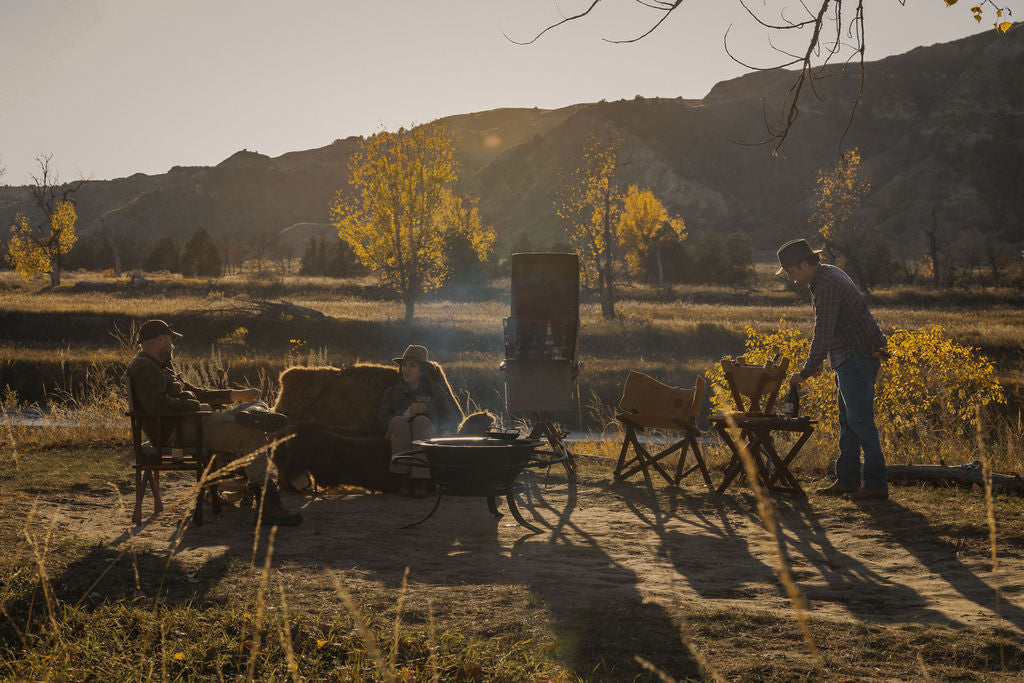
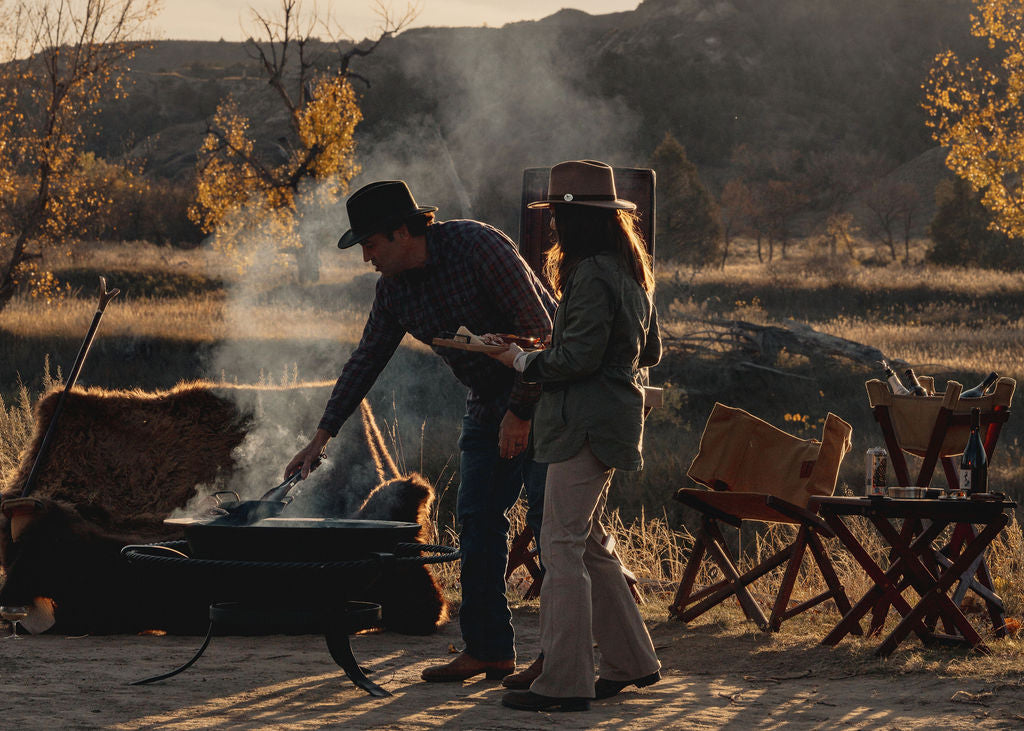
There is a stretch of late summer afternoon, somewhere between the second pour and the first plate, when two teak chairs in a golden-hour field are doing more storytelling than every word on the menu. Field furniture is the kind of furniture that earns its place by lasting, by traveling, by darkening and softening with the seasons until the chair you fold into the back of the Land Rover this weekend is the chair your daughter folds into hers in twenty years. That is the kind of furniture Field Traditions is in the business of making. This is a guide to what makes it work.
A short history of field furniture
Field furniture has two parallel histories. One is British and military. The other is American and sporting. Both have shaped the pieces that travel into the field today.

The British safari chair, from campaign chair to director's chair
The safari chair, also called the campaign chair, has its origins in the 1820s when British military officers needed seating that could fold flat into a baggage train and assemble at the end of a long march. The original design specified teak, oiled canvas, and brass, three materials that have proven across two hundred years to be the foundation of any field chair worth carrying. By the late nineteenth century the British safari chair had become a fixture of expedition kit, and by the 1920s it had migrated into the design language of Hollywood film sets, which is where the term "director's chair" first enters the vocabulary. The modern Safari Folding Teak Director's Chair is a direct descendant of that line. The geometry is the same. The brass joinery is the same. The canvas is the same heavyweight oiled cotton duck.

The American field bar, the bourbon tradition, and the outdoor table
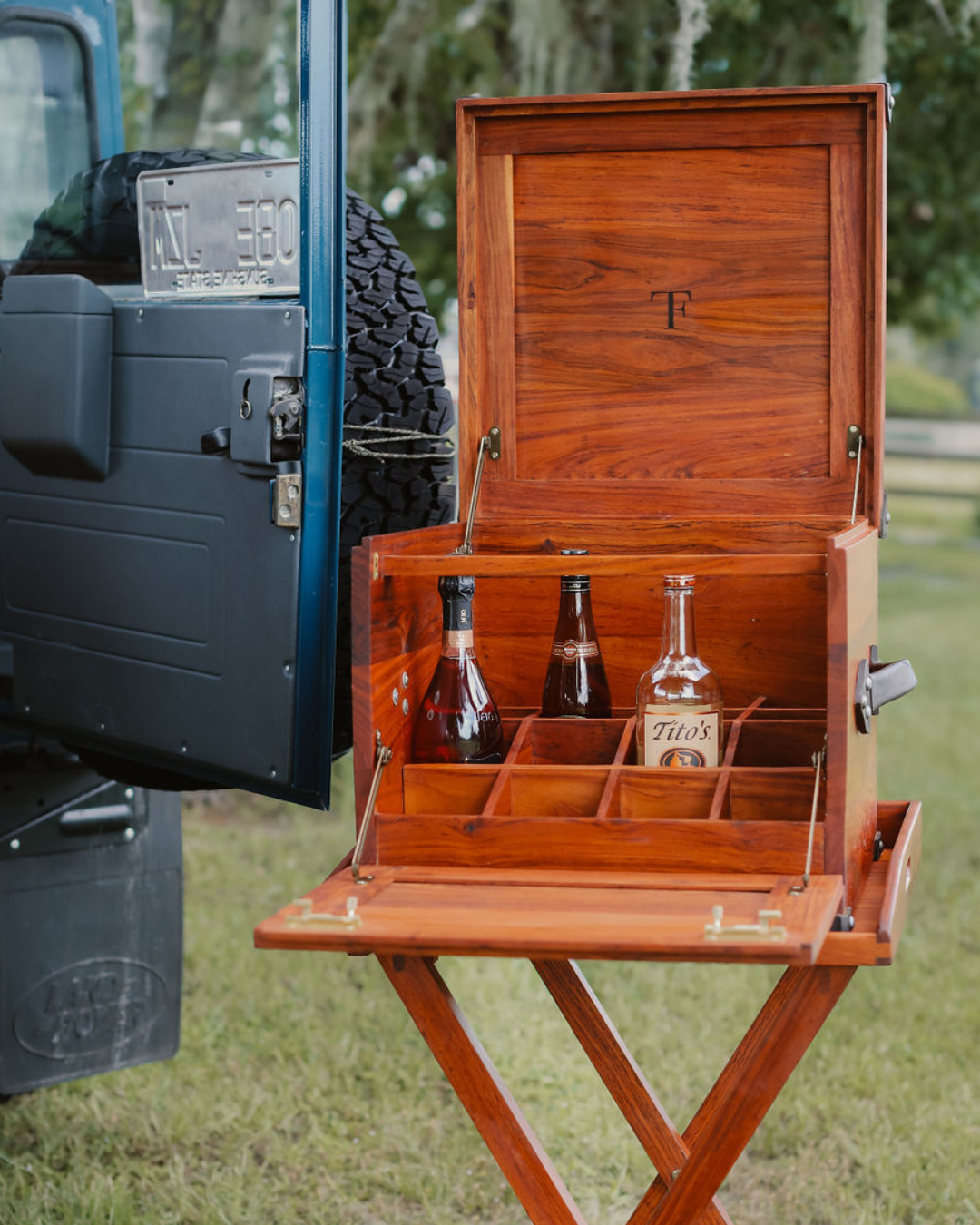
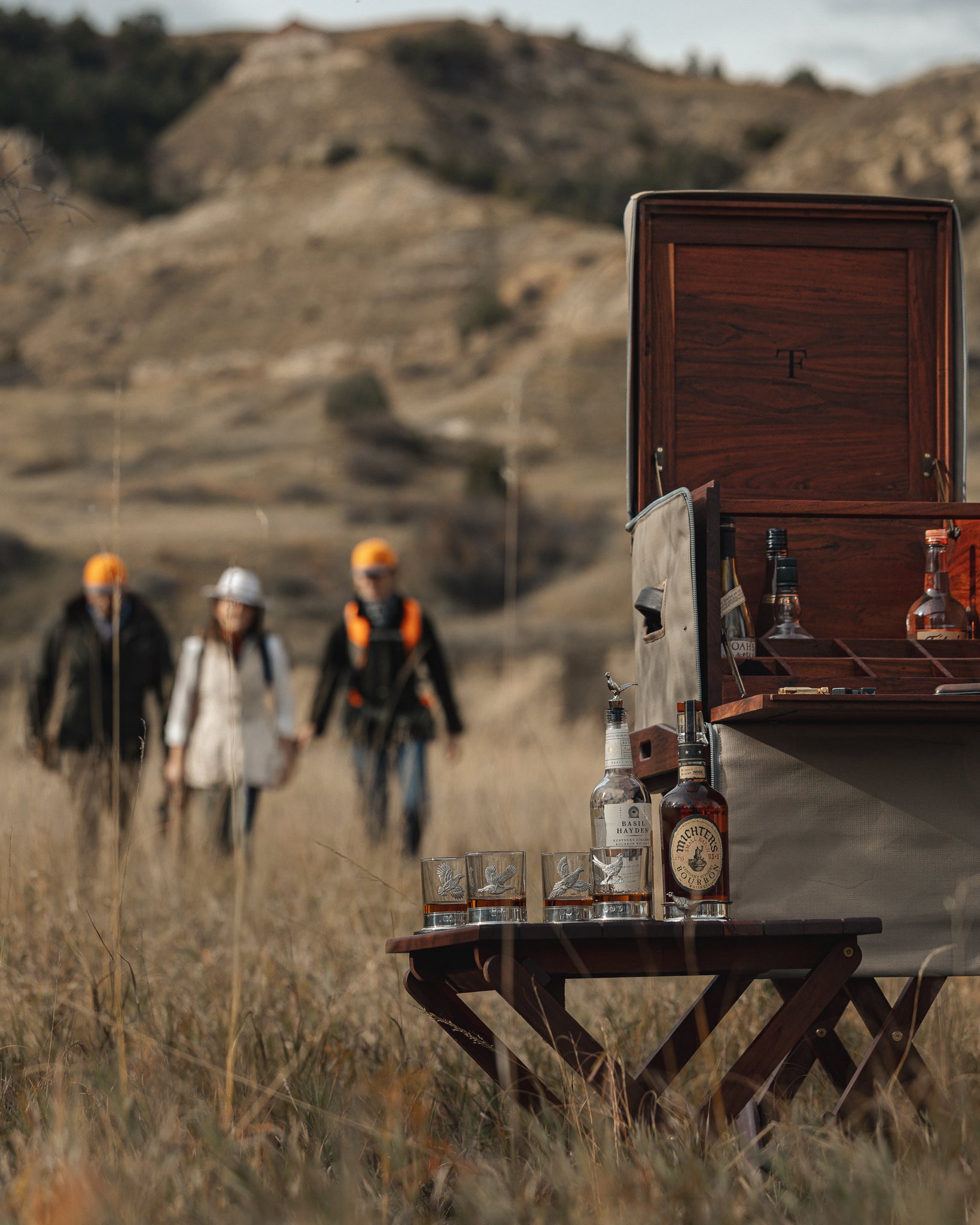
The American field bar is a younger tradition, born out of the gentleman's outdoor culture of the early twentieth century. Where the British safari chair came from military necessity, the American field bar came from American sporting hospitality. The bourbon tradition of the American South, the duck camp culture of the Mississippi flyway, the deer camp tradition of the upper Midwest, all converged on the same idea, the bar that travels to the field. The Handcrafted Teak Safari Field Bar is the modern realization of that tradition. Solid Zambezi teak surfaces, brass fittings, leather carrying handles, and a folding architecture that lets two people carry the whole bar from the truck to the bank of the river in a single trip.
The four things that make field furniture last
There is no single secret to field furniture that outlasts a generation. There are four things, in combination.
The material
The materials are the part of field furniture that you can feel before you even sit in it. Teak is the wood for outdoor furniture because the oil is inside the grain, not on top of it. It does not need to be varnished, and the weather cannot rot it the way it rots most other tropical hardwoods. The teak in a Field Traditions safari chair is sustainably sourced and finished to take a thirty-year arc of sitting, folding, traveling, and weathering. The brass joinery is solid, not plated. The canvas on the seat and the back is the same heavyweight oiled cotton duck that was first specified for British campaign furniture in the nineteenth century. The leather on the trim, the cartridge bags, and the cigar cases is full-grain, the strongest cut of the hide and the one that develops the deepest patina. Together these four materials are the reason field furniture lasts. None of them is the cheapest option. All of them are the right one.
The joinery
Joinery is the hidden language of field furniture. Mortise-and-tenon for the wood, brass riveted to leather for the straps, copper-riveted leather panels on the cartridge bags. None of these techniques are new. Mortise-and-tenon joinery has been used in furniture making for at least six thousand years, and brass-riveted leather construction has been a standard since the Roman cavalry equipped its horsemen. What makes the joinery of a good field chair distinct is that it is engineered to absorb stress at the corners, not at the surfaces. Every fold, every seat, every transport from the back of a Land Rover to a riverside camp passes its load through the joinery, not the canvas. That is why a hundred-and-twenty-year-old British campaign chair will still hold a hundred and eighty pounds of weight on its original brass pins.
The shape
Field furniture has two fundamental shapes, folding for the journey and holding for the use. The Safari Folding Teak Director's Chair folds flat to a thickness of less than three inches and weighs under fifteen pounds. The Safari Expedition Teak Folding Table does the same. The Handcrafted Teak Field Bar folds in a more architectural way, with the bar surfaces hinging down to become a flat carrying package. The hinges and pivots that allow this folding architecture are the most stressed components of any field piece, which is why the best examples use solid brass fittings rather than plated steel. The shape of field furniture has not really changed in two hundred years, and there is a reason for that.
The patina
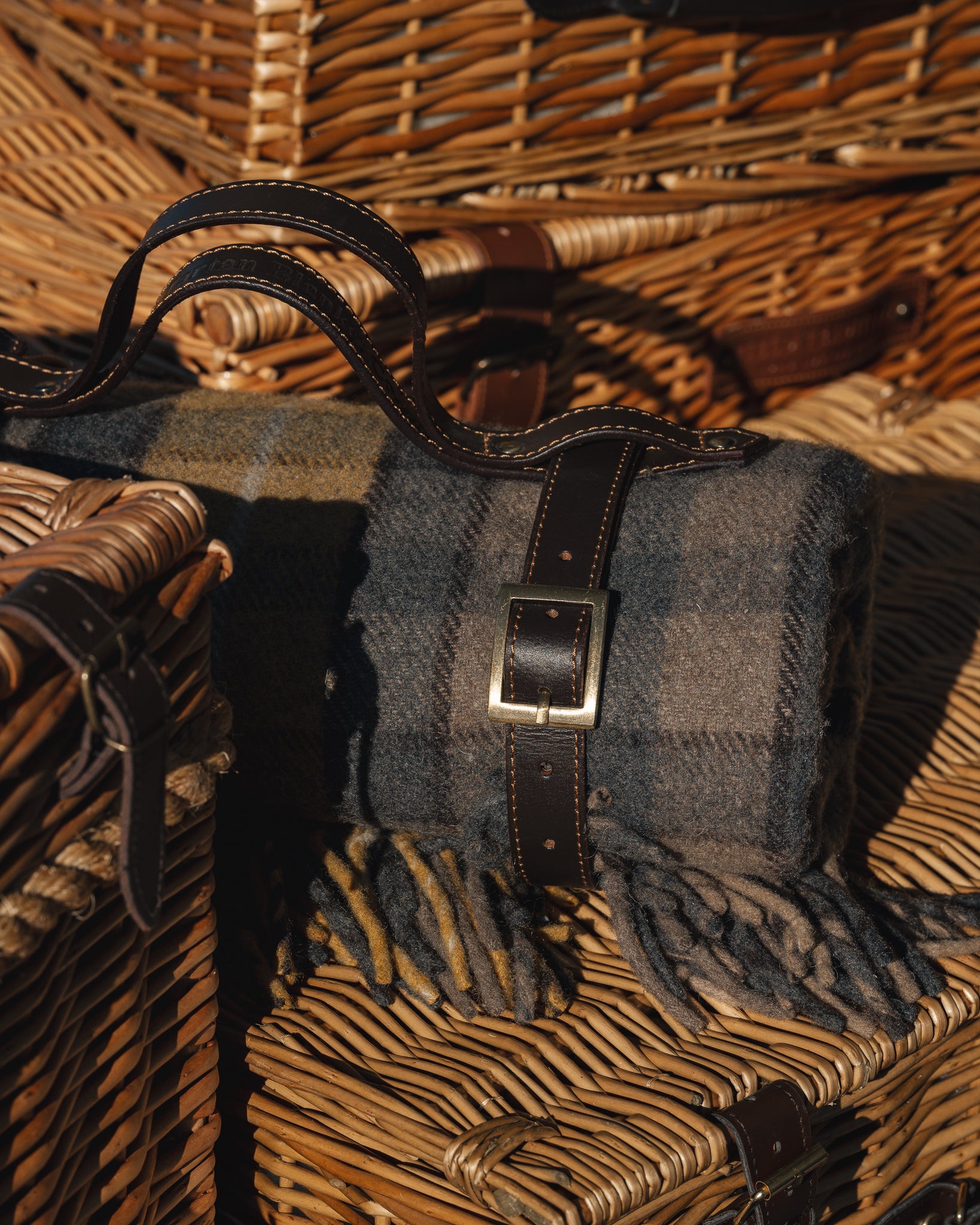
The fourth thing that makes field furniture work is the part most people do not think about when they buy it. Patina. Teak grays beautifully when left in the weather. The brass darkens to a warm bronze. The oiled canvas softens to the texture of an old fishing jacket. The leather darkens with every road. A new field chair looks correct on the showroom floor. A ten-year-old field chair looks earned. That earning process is the part of the purchase that gets better, not worse, over time, and it is the single biggest reason to invest in field furniture made from the right materials. The chair you order this season is the chair your son or daughter will inherit, with a story of every place it has been built into the grain of the teak.
The Field Traditions pieces, and what each one is built to do
Field Traditions makes the pieces named above and a small collection of supporting pieces that work to the same standard. Here is what each one is built to do.

The Safari Folding Teak Director's Chair
The Safari Folding Teak Director's Chair is the centerpiece of the field furniture collection. The teak is sustainably sourced and oiled, not varnished. The canvas is heavyweight oiled cotton duck in Ripstop Sand. The brass joinery is solid, not plated. The chair folds flat to under three inches and weighs fourteen pounds, so two of them go into the back of a Land Rover with room to spare. It is the chair that ends every shoot weekend, every long Saturday outdoors, every summer field supper. Built for thirty years of folding, traveling, and sitting. The Savannah Safari Field Chair is the closed-form alternative for camp settings where folding is not a daily requirement.
The Handcrafted Teak Field Bar
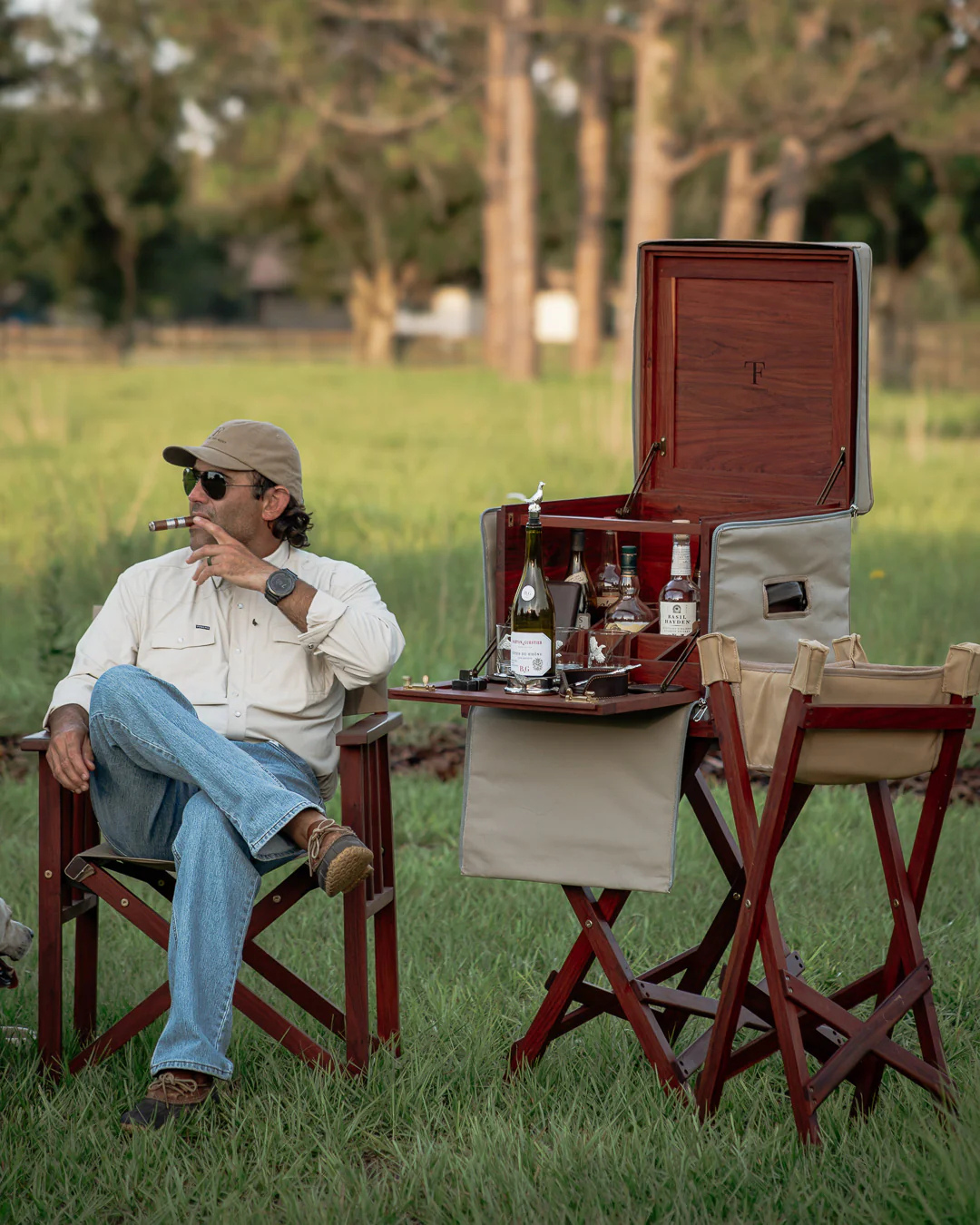
The Handcrafted Teak Safari Field Bar with Leather Handles is the social center of the field collection. Solid Zambezi teak, leather carrying handles, brass fittings. The bar surface holds four bottles, eight whiskey glasses, ice, and a cocktail kit. The Handcrafted Teak Camp Field Bar is a slightly smaller variation built around solid brass fittings and a more compact footprint. Both fold flat for transport. Both age into pieces that get better with every season they spend outdoors. The field bar is where the day finishes, and the right field bar is one that will still be standing thirty summers from now.
The leather goods
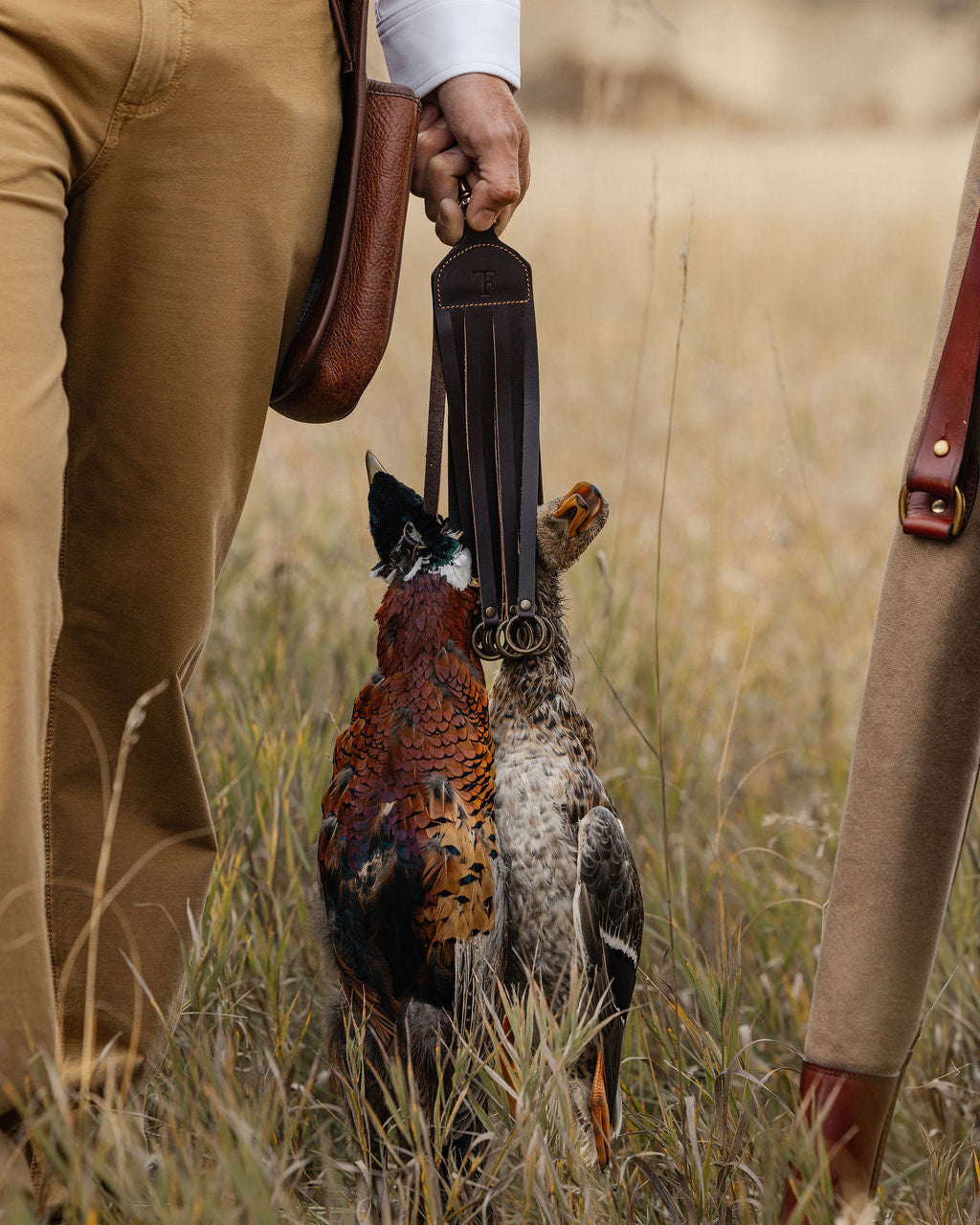
Field furniture and field leather goods travel together. The Cotswolds Field Cartridge Bag is the heritage British shooting bag, full-grain leather, 100-shell capacity, made to be carried into a thousand mornings. The Heritage Canvas and Leather Cartridge Bag is the more accessible price point and still built to last a generation. The Field Traditions Heritage Canvas 3 Cigar Holder is the leather piece that closes every camp evening. The Field Traditions Brockenhurst Leather Shotgun Cleaning Roll Kit is the case that lives in the gun cabinet. Each of these is a leather piece that will outlast a season, then a decade, then a generation. Each one darkens with every road.

The supporting pieces
The collection extends beyond the chair, the bar, and the bags. The Safari Expedition Teak Folding Table is the table that sits beside the bar. The Safari Tray Table is the smaller piece that holds a single drink and a book. The Safari Camp Butler's Tray Table is the workhorse, four-person ready, full surface for plates and glasses. The Safari Canvas Campaign Wine Cooler and Wash Stand is the canvas-and-wood piece that holds the wine in ice. The Staghorn Thumb Stick leans against the chair when you sit down. Each piece is sized to the others, briefed to the same palette, and built to last across the same generation.
How to set up a field bar for a long Saturday
The field bar is the social center of any outdoor afternoon. Setting one up is half craft and half hospitality. The order:
- Find a stretch of level ground in golden-hour light. North-facing if you can.
- Open the Handcrafted Teak Field Bar and let it settle for a minute. Teak relaxes in the air the same way leather does in the hand.
- Lay a parchment linen on the bar surface. Two whiskey glasses on the left, two on the right. The decanter or bottle in the center.
- Add a small bowl of ice if the afternoon is long. Otherwise let the whiskey stones do the work without diluting the pour.
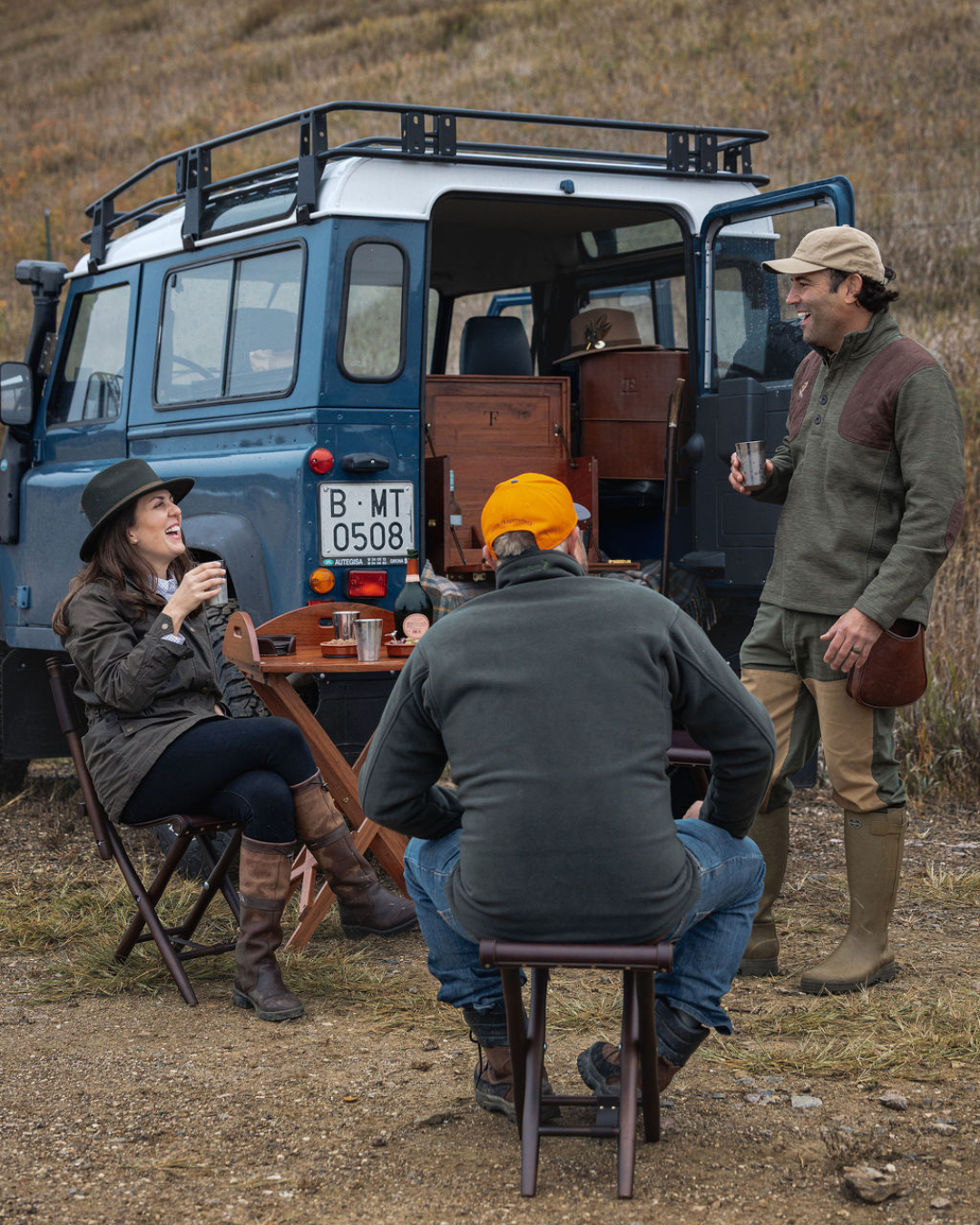
- Bring two Safari Folding Teak Director's Chairs to the bar. Position them at a slight angle to each other, never directly facing. Conversation flows better at fifteen degrees off square.
- Set a small side surface for the cigars and the lighter if cigars are in the day. The Heritage Canvas 3 Cigar Holder is the standard piece.
- Pour the first glass before anyone sits down. The bar is open the moment the first pour lands.
Caring for field furniture across a season
Care is light for the materials done right and demanding for the materials done wrong. Teak needs no varnish, no oil, no maintenance other than a light wipe-down at the end of the season. Brass darkens naturally, and most owners prefer that to a polished finish. If you want it polished, a soft cloth and a small amount of brass cleaner once a year is enough. Oiled canvas needs a re-oiling every three to five years, easy to do at home. Full-grain leather wants a light leather conditioner once a season, particularly the cartridge bags and cigar cases that see direct sun and field weather. Storage between seasons matters more than maintenance. Dry, ventilated, off the ground. Wrap leather in cotton, not plastic. Store teak under cover where rain cannot pool. A piece of field furniture that has been stored well for forty winters will look better in year forty than it did in year five.
The piece that lasts becomes the piece that stays in the family
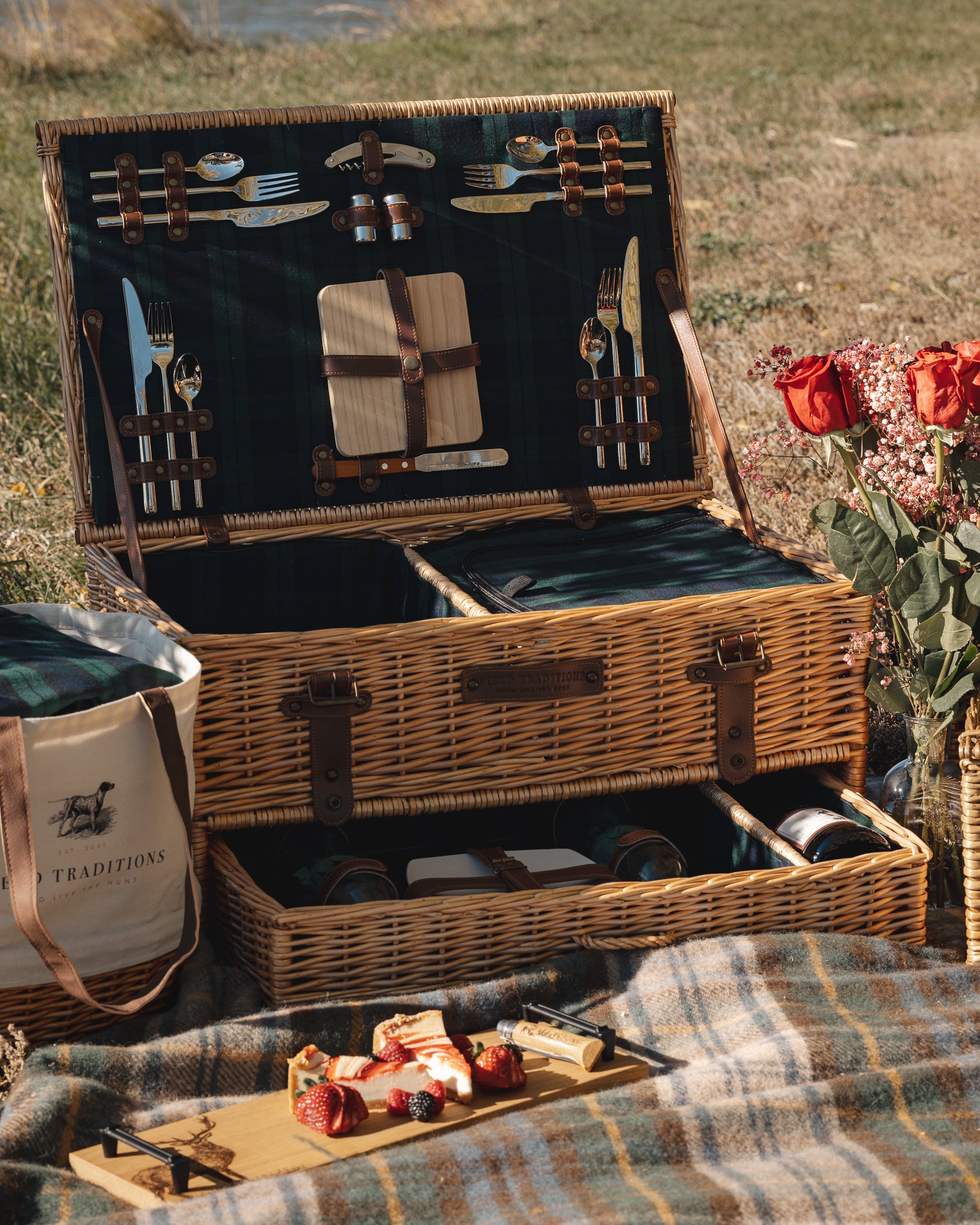
Twenty years from now, the director's chair you ordered this summer will be folded into the back of a different car, on a different road, under a different sky, and it will still hold the same weight. That is the whole bet of field furniture. Teak that ages without splitting. Leather that darkens with every road. Brass that holds for decades. The Safari Folding Teak Director's Chair and the Handcrafted Teak Field Bar sit at the heart of the Field Traditions After the Hunt collection. The lighter outdoor entertaining pieces, the picnic baskets and the enamelware and the whiskey glasses, sit in the Summer Supper Edit. Crafted to last generations. Built to travel wherever the day goes.

Leave a comment
This site is protected by hCaptcha and the hCaptcha Privacy Policy and Terms of Service apply.